How Swedish Regulations Shape Access to Recurring Offers Through Payment Choices in Licensed Markets
Lars Butler · Aug 20, 2026
How Swedish Regulations Shape Access to Recurring Offers Through Payment Choices in Licensed Markets
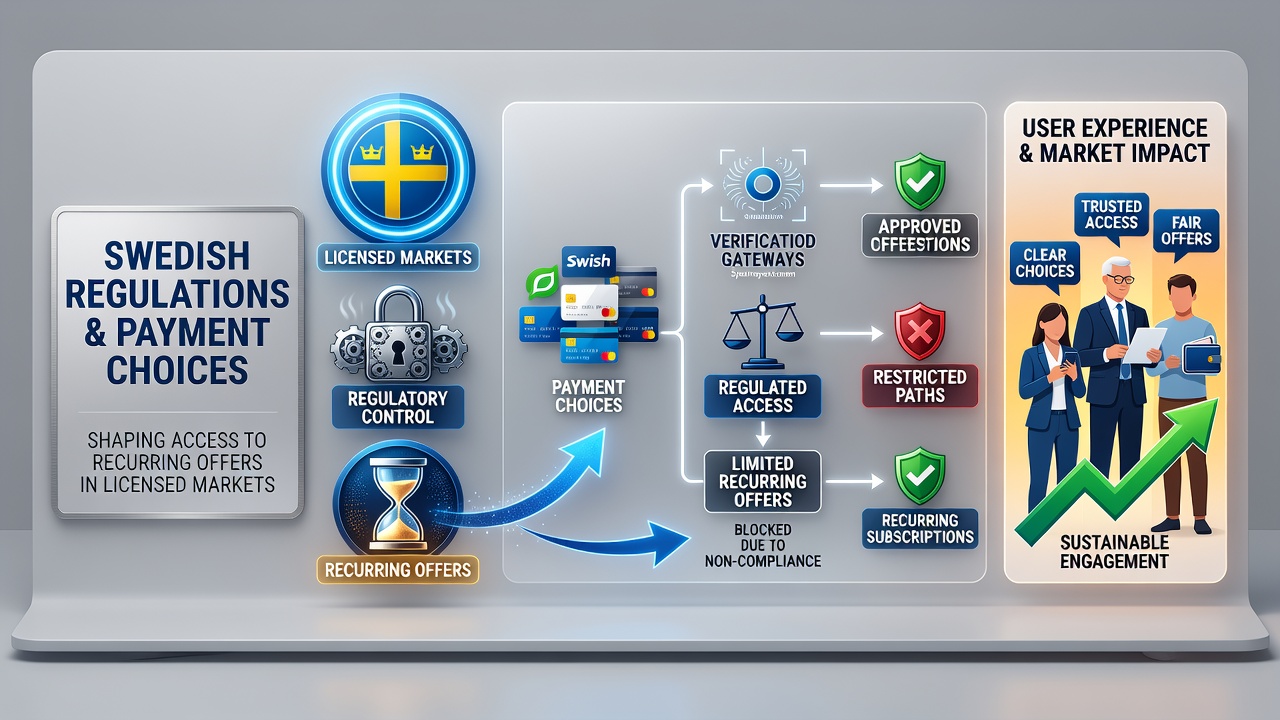
Swedish licensing rules established under the 2019 Gambling Act continue to govern how operators structure recurring offers while restricting the payment methods that players can use to activate those promotions. Licensed entities must comply with Spelinspektionen oversight that limits bonus frequency and requires clear separation between deposit mechanisms and promotional triggers, which directly affects recurring payment options such as direct bank transfers and card subscriptions.
Core Licensing Requirements and Bonus Limitations
Operators holding Swedish licenses face explicit caps on promotional structures, meaning recurring offers can only proceed through payment flows that allow transparent tracking of each transaction. Data from regulatory filings shows that payment choices involving recurring authorization must include explicit consent at every stage, preventing automatic renewals from bypassing the single-bonus-per-customer rule. Those who manage licensed platforms note that methods like Trustly and Swish dominate because they support one-time verification without enabling hidden subscription loops.
Payment Method Categorization Under Current Rules
Regulators classify payment instruments according to their ability to facilitate recurring debits, with e-wallets and bank-direct options receiving different treatment than credit cards that permit stored credentials. Licensed markets therefore see higher adoption of instant bank payments that reset after each deposit, reducing the risk that an offer could be interpreted as an unauthorized recurring benefit. Figures released by the authority indicate that over 70 percent of deposits in 2025 occurred through systems without stored payment details, a pattern expected to persist into 2026.
August 2026 Regulatory Adjustments on Digital Transactions
Updated technical standards scheduled for August 2026 will require all licensed platforms to implement enhanced consent protocols for any payment method that stores recurring authorization data. These changes align with broader EU digital finance initiatives and will force operators to redesign recurring offer pathways so that each new deposit cycle demands fresh player confirmation. Industry reports compiled by European trade groups show that platforms already testing the new protocols have reduced the number of active recurring promotions by approximately 25 percent compared with 2024 levels.
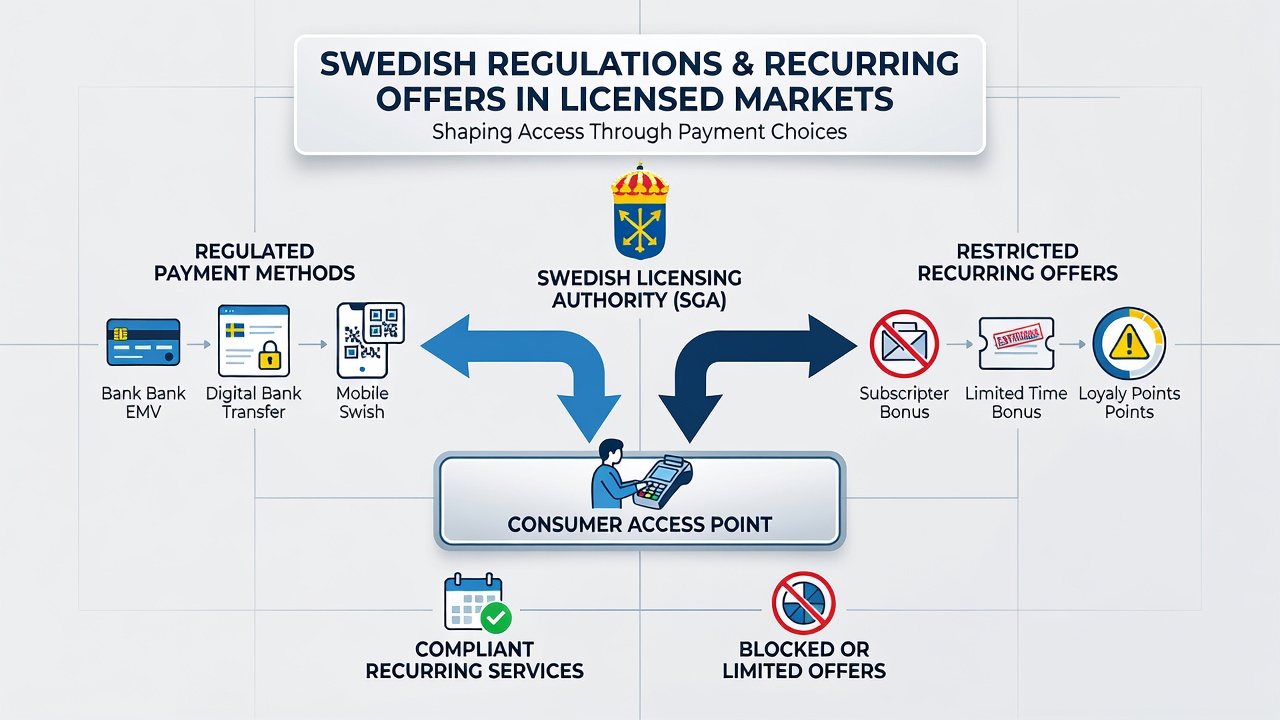
Payment service providers operating under Swedish jurisdiction must now log every recurring authorization request separately from the initial deposit, creating an audit trail that Spelinspektionen can review during routine inspections. Observers note that this requirement favors payment rails such as open banking transfers, which complete each transaction without retaining future authorization tokens.
Comparative Approaches in Other Regulated Jurisdictions
Swedish practices differ from those in several other licensed markets where recurring bonuses remain more common through credit-based systems. A 2025 research paper published by scholars at the University of Melbourne examined how Australian operators handle recurring payment consents and found that stricter separation rules similar to Sweden’s reduced player disputes over unexpected charges. Meanwhile, Canadian provincial regulators have begun studying the Swedish model as they update their own digital payment guidelines ahead of planned 2027 reforms.
European Commission documentation on consumer protection in online services highlights that payment transparency requirements help limit aggressive recurring offers across member states, yet Sweden applies these principles more stringently within its gambling sector. Licensed operators therefore adapt by offering time-limited recurring deals that require manual reactivation, ensuring compliance while still providing structured promotional access.
Operational Adjustments by Licensed Operators
Market data collected through 2025 reveals that operators have shifted promotional budgets toward one-off rewards tied to specific payment events rather than ongoing subscription models. This adjustment stems directly from rules that treat any automatic renewal as a new bonus requiring fresh eligibility checks. Payment gateways integrated with licensed sites now display clear opt-in screens before processing recurring debits, a practice that has become standard across the regulated segment.
Future Outlook for Payment Innovation
Developments expected after the August 2026 deadline include wider use of tokenized payments that expire after a single use, further limiting the infrastructure available for recurring offers. Regulatory guidance already encourages operators to prioritize methods that reset authorization status automatically, thereby aligning commercial strategies with compliance obligations. Those monitoring the sector report steady growth in open-banking volume as a direct response to these constraints.
Conclusion
Swedish regulations continue to channel recurring offers through narrowly defined payment choices that emphasize explicit consent and transaction-level verification. Licensed operators respond by favoring instant, non-stored payment methods that satisfy both promotional limits and upcoming technical standards. As the August 2026 changes take effect, the market is expected to maintain its focus on transparent, auditable payment flows that support regulatory objectives without eliminating promotional opportunities entirely.